.png)

Joe Carter
March 16, 2026
Many founders believe that if they can just push revenue high enough, the company will automatically become valuable.
That’s not how buyers think.
Private equity firms, investors, and strategic acquirers evaluate businesses through a different lens:
Enterprise value.
Enterprise value comes from structure, predictability, and scalability, not just top-line growth.
Buyers look for businesses that have:
• Recurring revenue
• Documented systems
• Clean financials
• Professional leadership structure
• Operational independence from the founder
If a company depends entirely on the founder to operate, it’s not a business.
It’s a job with overhead.
The Founder Bottleneck Problem
One of the most common growth ceilings appears between $1M and $5M in revenue.
At that stage, founders often become the operational center of everything:
• Sales approvals
• Hiring decisions
• Financial oversight
• Customer escalation
• Vendor relationships
• Operational troubleshooting
When this happens, the business cannot scale beyond the founder’s capacity.
Growth creates more stress instead of more value.
In the conversation, Joe Carter explains that founders must shift from operator to architect.
The goal is simple:
Build a company that works without you.
The Infrastructure Most Businesses Ignore
Many companies focus on marketing and sales while neglecting the operational infrastructure required to scale.
That infrastructure includes:
Financial Clarity
Messy books destroy investor confidence.
When financials are unclear, buyers assume risk.
Risk lowers valuation.
Clean financial reporting allows leadership to make fast, strategic decisions and prepares the business for buyer due diligence.
Compliance & Entity Structure
Many founders delay compliance decisions until they become a problem.
But improper entity structure, payroll issues, or regulatory gaps can quickly derail investor interest.
Professional structure signals operational maturity.
HR & Administrative Systems
HR, payroll, and administrative systems may seem like back-office functions, but they create operational leverage.
When these systems are documented and automated:
• hiring becomes faster
• onboarding improves
• accountability increases
• leadership bandwidth expands
Operational infrastructure frees founders to focus on strategy instead of firefighting.
What Investors Actually Look For
During due diligence, investors evaluate much more than revenue.
They examine whether the business is transferable.
A transferable business includes:
• documented operating procedures
• KPI dashboards and performance tracking
• leadership accountability systems
• predictable revenue streams
• repeatable customer acquisition systems
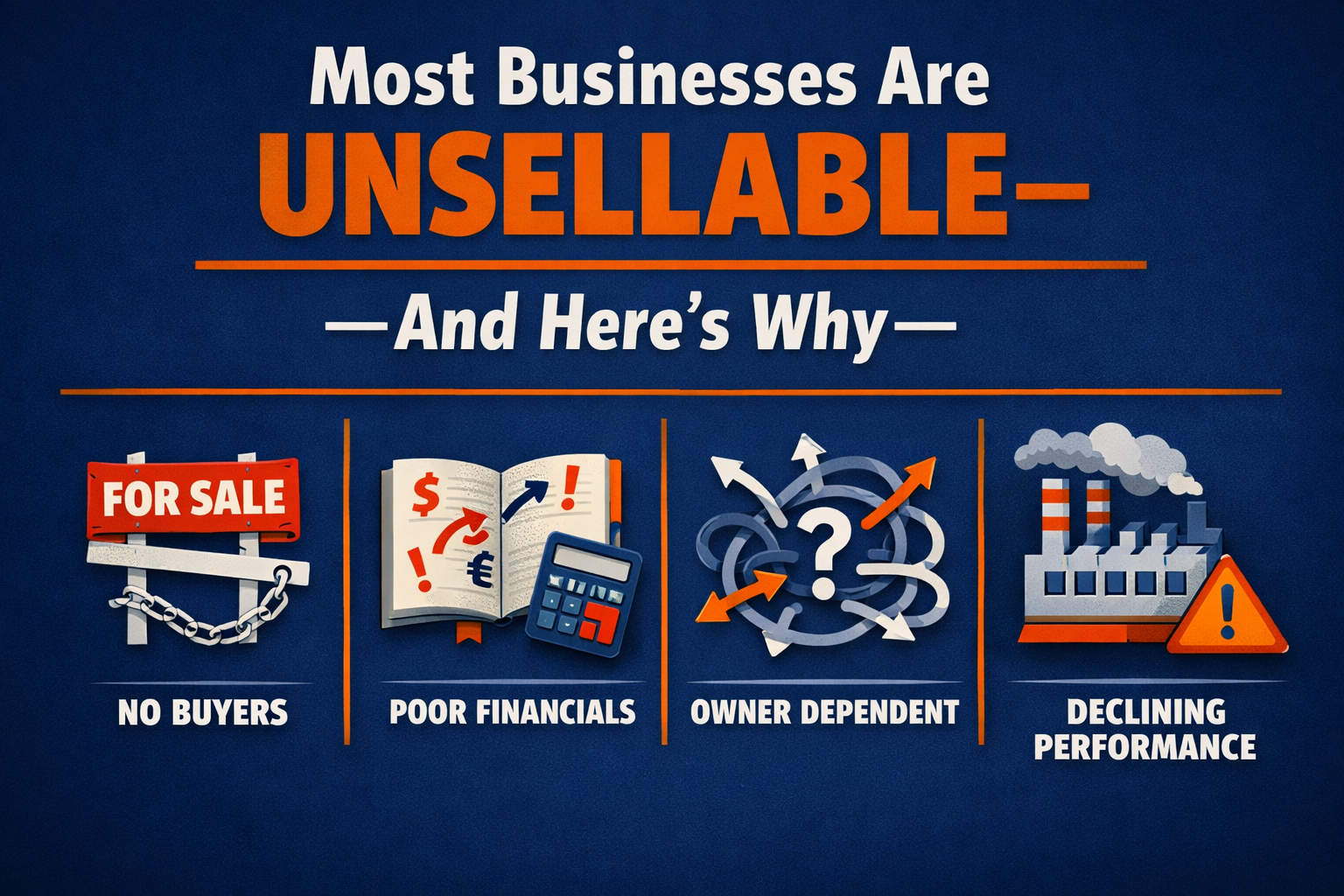
This is why many high-revenue companies still struggle to attract buyers.
The revenue exists.
The infrastructure does not.
The Question Every Founder Must Ask
Joe Carter shares a question every founder should ask themselves:
“Am I building a business… or am I the business?”
If the company stops operating when the founder steps away, the business cannot scale and it cannot sell.
True enterprise value comes from systems that work without the founder.
That’s the difference between building income and building wealth.
Key Lessons from This Episode
In this episode of the Lead, Manage, Thrive Podcast, Joe Carter and Justin from Propel break down:
✔ Why revenue growth alone does not increase valuation
✔ The difference between a job with overhead and a scalable company
✔ How operational infrastructure increases enterprise value
✔ Why messy financials destroy investor confidence
✔ The role of compliance and entity structure in scaling
✔ How founders become operational bottlenecks
✔ The hidden leverage of HR and administrative systems
✔ What investors and private equity firms evaluate during due diligence
✔ How companies break through the $5M growth ceiling
✔ How to build a business that operates independently of the founder
About Justin – Propel
Propel helps founders eliminate operational drag so they can focus on leadership, growth, and strategy.
Their work focuses on helping companies build the operational backbone required to scale beyond founder dependency.
About the Lead, Manage, Thrive Podcast
The Lead, Manage, Thrive Podcast is designed for founders, operators, and growth-minded entrepreneurs who want to build companies that truly scale.
Each episode explores the leadership frameworks, operational systems, and strategic thinking required to build a company that becomes a valuable, transferable asset.
Because building a business isn’t about working harder.
It’s about building smarter.
Watch the Full Episode
If your company is growing faster than its infrastructure, this episode will shift how you think about scale.
Watch the full conversation here:
👉 https://youtu.be/xtjRT7-veTQ
Final Thought
Revenue growth magnifies whatever already exists inside the business.
If systems are weak, chaos grows.
If systems are strong, value grows.
Revenue is a byproduct.
Value is the objective.
If you want to build a business that scales beyond the founder — and eventually becomes a sellable asset — the work starts with structure, systems, and leadership discipline.
Want help increasing the value of your business?
Visit www.twinflametx.com
Or apply for advisory with Twin Flame Group.
Joe Carter
Learn more about our founder Joe Carter, a nationally recognized business consultant and speaker.
Follow us on Linkedin.png)